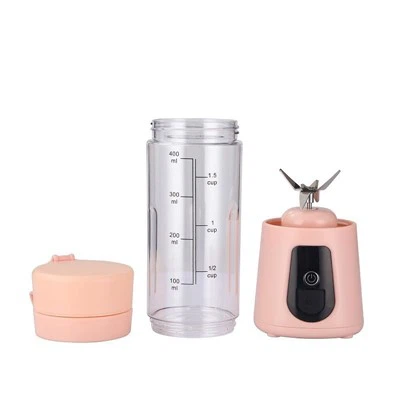
When it comes to blending, the market offers a wide range of blenders, each with its own set of features and capacities. As a supplier of USB Charging Portable Blenders, I've had the opportunity to closely examine how these innovative devices stack up against other types of blenders in terms of capacity. In this blog, we'll delve into the details and compare the capacity of USB Charging Portable Blenders with that of other popular blenders on the market.
Understanding Blender Capacity
Blender capacity is typically measured in volume, usually in ounces or milliliters. It refers to the maximum amount of liquid or solid ingredients that a blender can hold and process at one time. This is an important factor to consider when choosing a blender, as it determines how much you can blend in a single batch.
USB Charging Portable Blenders
USB Charging Portable Blenders are a relatively new addition to the blender market. They are designed for on - the - go use, making them perfect for people who are always on the move, such as students, travelers, and fitness enthusiasts. These blenders are compact and lightweight, and as the name suggests, they can be charged via a USB port.
The capacity of USB Charging Portable Blenders generally ranges from 12 to 20 ounces (about 355 to 591 milliliters). This is sufficient for making single - serving smoothies, shakes, or small batches of purees. For example, if you're making a post - workout protein shake or a quick breakfast smoothie, a USB Charging Portable Blender can easily handle the task.
One of the main advantages of these blenders is their portability. You can take them to the gym, office, or on a road trip, and still enjoy freshly blended drinks. However, their relatively small capacity may be a limitation if you need to make larger batches, such as for a family or a small gathering.
Countertop Blenders
Countertop blenders are the traditional workhorses of the kitchen. They come in a variety of sizes and capacities, with some models capable of holding up to 64 ounces (about 1893 milliliters) or more. These blenders are designed for home use and are often used to make large batches of smoothies, soups, sauces, and even ice cream.
Compared to USB Charging Portable Blenders, countertop blenders have a much larger capacity. This makes them ideal for families or those who frequently entertain guests. They also usually have more powerful motors, which can handle tougher ingredients like ice and frozen fruits more effectively. However, they are not as portable as USB Charging Portable Blenders and require a dedicated space on the kitchen counter.
Immersion Blenders
Immersion blenders, also known as stick blenders, are handheld blenders that can be immersed directly into a container of liquid or food. They are typically used for blending soups, sauces, and purees in the pot or bowl where they are being prepared.
The capacity of immersion blenders is not limited by the blender itself but rather by the container in which they are used. They can be used in small containers for single - serving blends or in large pots for making large batches of soup or sauce. Immersion blenders are more versatile in terms of capacity as they can adapt to different container sizes. However, they may not be as effective at blending large quantities of thick or tough ingredients as countertop blenders.
Comparison of Capacities
Let's take a more detailed look at how the capacity of USB Charging Portable Blenders compares to other blenders:
- Single - Serving Needs: For individuals who only need to make single - serving blends, a USB Charging Portable Blender is a great choice. Its 12 - 20 ounce capacity is perfect for a quick smoothie or shake. In contrast, countertop blenders may be overkill for single - serving needs, and immersion blenders may require more effort to blend small quantities.
- Family or Group Use: When it comes to making larger batches for a family or a small group, countertop blenders are the clear winner. Their large capacity allows for making enough smoothies, soups, or sauces to feed multiple people. USB Charging Portable Blenders would need to be used multiple times to achieve the same quantity, which can be time - consuming.
- Versatility: Immersion blenders offer the most versatility in terms of capacity, as they can be used in containers of various sizes. However, they may not be as efficient as countertop blenders for large - scale blending or as convenient as USB Charging Portable Blenders for on - the - go use.
The Advantages of USB Charging Portable Blenders Beyond Capacity
While the capacity of USB Charging Portable Blenders may be smaller compared to some other blenders, they offer several unique advantages:


- Portability: As mentioned earlier, their compact size and USB charging capability make them easy to take anywhere. This is a huge advantage for people who have a busy lifestyle and need to blend on the go.
- Energy Efficiency: USB Charging Portable Blenders generally consume less energy compared to larger countertop blenders. This can be a cost - effective option in the long run, especially if you use your blender frequently.
- Ease of Use and Cleaning: These blenders are usually very easy to operate, with simple controls. They are also easy to clean, as most parts can be removed and washed under running water.
Our Product Offerings
As a supplier of USB Charging Portable Blender, we offer a range of high - quality products. Our blenders are designed with the latest technology to ensure efficient blending and long - lasting performance. We also have High Power Juicer Extractor and Lithium Battery Juicer options for those who need more power or a different type of juicing experience.
Contact for Purchase and Negotiation
If you're interested in purchasing our USB Charging Portable Blenders or any of our other products, we'd love to hear from you. Whether you're a retailer looking to stock our products or an individual interested in a personal blender, we can provide you with detailed information and discuss the best options for your needs.
References
- "Blender Buying Guide" by Consumer Reports.
- "The Ultimate Guide to Blenders" by Good Housekeeping.
- Industry reports on small kitchen appliances.