Hey there! As a juicer supplier, I get asked a lot about how to pick a juicer with top - notch juice separation ability. It's a crucial factor when you're looking to get the most out of your fruits and veggies. Let's dive into the key points to consider.
1. Type of Juicer
There are mainly three types of juicers: centrifugal juicers, masticating juicers, and triturating juicers. Each has its own juice - separation characteristics.


Centrifugal Juicers
These are the most common ones you'll find in the market. They work by spinning a blade at high speeds to shred the produce and then use centrifugal force to separate the juice from the pulp. They're super fast and can handle large quantities of fruits and veggies in a short time. However, the high - speed spinning can generate heat, which might affect the nutritional value of the juice. Also, the juice separation might not be as efficient as other types, leaving a bit more pulp in the juice.
Masticating Juicers
Masticating juicers, also known as slow juicers, work at a much lower speed. They crush and press the produce to extract the juice. This slow process results in better juice separation, as they can squeeze out more juice from the pulp. The juice also retains more nutrients and enzymes because there's less heat generated. But they're generally slower than centrifugal juicers and can be a bit more expensive.
Triturating Juicers
These are the high - end option. They use a two - stage process: first, they crush the produce, and then they press it to extract the juice. This results in the best juice separation among the three types. The juice is very pure, with minimal pulp, and it has a longer shelf - life. But they're also the most expensive and can be bulkier.
2. Mesh Screen Quality
The mesh screen in a juicer plays a vital role in juice separation. A high - quality mesh screen has small, evenly - spaced holes that allow the juice to pass through while keeping the pulp out.
When you're looking at a juicer, check the mesh screen. If it's made of stainless steel, it's likely to be more durable and resistant to corrosion. A fine - mesh screen will give you better juice separation, but it might also get clogged more easily. So, look for a juicer that has an easy - to - clean mesh screen.
3. Pulp Ejection System
A good juicer should have an efficient pulp ejection system. This system is responsible for removing the pulp from the juicer, which helps in maintaining the juice separation process.
Some juicers have a wide pulp ejection chute, which allows the pulp to come out easily without getting stuck. Others have a self - cleaning mechanism that helps in clearing the pulp from the mesh screen and the chute. A well - designed pulp ejection system ensures that the juice remains pure and free from excess pulp.
4. Motor Power
The motor power of a juicer is another important factor. A more powerful motor can handle tough produce like carrots and beets more easily, which in turn affects the juice separation.
If the motor is too weak, it might not be able to crush and extract the juice from the produce effectively, resulting in poor juice separation. On the other hand, a very powerful motor can generate a lot of heat, which we've already discussed can be a drawback. So, look for a juicer with a motor power that's appropriate for the type of produce you'll be using it with.
5. Size and Capacity
The size and capacity of the juicer matter, especially if you're planning to use it for large - scale juicing. A larger juicer can handle more produce at once, which is great if you have a big family or if you're using it in a commercial setting.
However, a larger juicer might also be bulkier and take up more space in your kitchen. So, consider your needs and the available space before making a decision.
6. Additional Features
Some juicers come with additional features that can enhance the juice separation ability. For example, some have a reverse function that helps in unclogging the mesh screen. Others have a variable speed control, which allows you to adjust the speed according to the type of produce you're using.
Our Product Recommendations
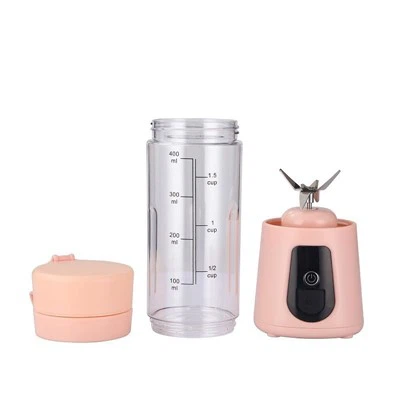
We offer a range of juicers with excellent juice separation ability. If you're looking for a juicer for outdoor use, check out our Outdoor Use Portable Blender. It's lightweight and easy to carry, perfect for those who love to have fresh juice on the go.
For those who prefer a juicer that can be charged via USB, we have the USB Charging Juicer. It's convenient and can be used anywhere you have a USB port.
And if you're looking for a battery - powered option, our Battery Power Juicer is a great choice. It offers the freedom to use the juicer without being tied to a power outlet.
Conclusion
Selecting a juicer with good juice separation ability involves considering several factors, including the type of juicer, mesh screen quality, pulp ejection system, motor power, size, and additional features. By taking these factors into account, you can find a juicer that meets your needs and gives you the purest, most nutritious juice.
If you're interested in purchasing our juicers or have any questions about our products, feel free to reach out to us for a procurement discussion. We're here to help you make the best choice for your juicing needs.
References
- "The Complete Guide to Juicing" by Jane Smith
- "Juicing for Health" by John Doe